Iran is engulfed in its most intense period of unrest in decades — a nationwide protest movement that began in late December 2025 over economic collapse and swiftly evolved into a broader challenge to the Islamic Republic’s leadership. What started as demonstrations over inflation, currency collapse, and inequality now poses a direct threat to Supreme Leader Ayatollah Ali Khamenei’s grip on power, with security forces responding in ways that have drawn global outrage.
But beyond the human tragedy, the turmoil has thrust Iran back into the center of international geopolitics — with the United States closely watching, and potentially positioning itself to leverage the unrest for strategic gain.
Trump Signals Unconditional Backing for Israel as Iran Nuclear Fears Resurface
A Movement That Became a Crisis
The unrest began on December 28, 2025, as citizens protested economic hardship, including plummeting currency value and rising food prices. Within days, demonstrations spread across all 31 Iranian provinces, quickly expanding demands from economic reform to swee ping political change, with many activists calling for an end to theocratic rule.
Iran’s response has been brutal. As of mid-January 2026, credible human rights groups report thousands killed, scores of mass arrests, and widespread use of live ammunition against crowds. In response, the government imposed a near-total internet and telecom blackout on January 8, cutting internal and external communications to suppress reporting and prevent coordination.
The scale of the crackdown and the blackout reflects deep fear within the regime that the protests are not a passing crisis. Leaders have historically used similar tactics — including previously blocking digital access during unrest — but the intensity and persistence of 2025-26 protests appear to signal a deeper legitimacy crisis.
Why Iran Matters to the U.S.
Iran plays a pivotal role in global geopolitics for several reasons that shape U.S. interests:
- Israel’s Security Context
Israel views Iran as its greatest strategic threat, particularly regarding ballistic missiles and nuclear capabilities. Last year’s conflict and subsequent U.S. support for Israel amplified tensions, with Trump signaling readiness to support Israeli military action against Tehran if it pursued nuclear ambitions. - Energy and Global Shipping Routes
Iran controls key routes in the Persian Gulf and Strait of Hormuz — chokepoints for roughly 20–30% of global oil supply. Disruptions there — whether from war, internal collapse, or sanctions — can instantly spike oil prices, affecting inflation and economic stability worldwide. Analysts note that market sensitivity to U.S.–Iran tensions is already visible in crude price volatility as unrest intensifies. - Iran’s Nuclear Program
Despite past strikes and sanctions, intelligence assessments suggest Iran could attempt to rebuild its nuclear program if not actively deterred. Trump’s previous statements warning Tehran that the U.S. would “knock the hell out of them” underscore how nuclear developments remain central to American policy.
These overlapping concerns — security, stability, and energy market continuity — explain why Washington remains intensely focused on events in Tehran.
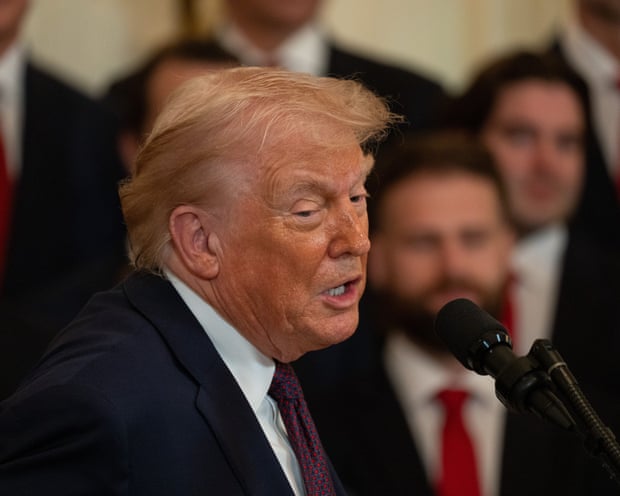
Trump insisted he would be able to negotiate a better agreement with Iran.’ Photograph: Andrew Leyden/Zuma Press Wire/Shutterstock
The U.S. Opportunity in Crisis?
For the United States, the unfolding situation offers a rare convergence of domestic upheaval and external pressure:
- Diplomacy and Pressure: The U.S. has already imposed fresh sanctions on Iranian leaders and entities connected with the repression of protesters, signaling firm political support for Iranian civil society.
- Signal of Strength: The dramatic capture of Venezuelan President Nicolás Maduro in early January 2026 — by U.S. forces — sent shock waves across capitals allied with Tehran. For Iran’s leadership, seeing a longtime ally unseated militarily might amplify fears that Washington is willing to act decisively if it perceives or asserts a legal and moral justification to intervene — whether for human rights, security, or strategic objectives.
- Crisis as Leverage: Moments of internal crisis often reshape external negotiations. A weakened or delegitimized government could be more susceptible to diplomatic pressure over its nuclear program, regional proxy support, and influence in Iraq, Syria, and Lebanon.
While Iranian authorities blame external forces — especially the U.S. and Israel — for stoking unrest, independent analysis suggests the protests are primarily driven by dire domestic conditions and long-simmering popular anger.
Trump’s Warnings and the Threat of Military Action
President Donald Trump has explicitly warned that the U.S. could take strong action “if Iran hangs protesters” or commits executions, linking human rights concerns to potential U.S. responses. For Tehran’s leaders, these threats are not abstract. Past confrontations — including Trump’s support for Israeli strikes and the dramatic U.S. raid to seize Maduro — shape a perception in Tehran that the U.S. might respond forcefully if it deems domestic repression a threat to regional stability.
In mid-January, Trump claimed reports from Tehran indicated that killings had stopped but did not rule out military options, underscoring that strategic patience is balanced against pressure.
Internet Blackout: A Sign of Entrapment?
The complete communications shutdown in Iran — including both traditional internet and attempts to block satellite services — serves two immediate goals for the regime: prevent protest coordination and hide the scale of repression. But these blackouts also isolate the population, deepen civil frustration, and reduce global transparency — conditions that can backfire by fueling mistrust and international sympathy for protesters.
Some analysts suggest that cutting off digital lifelines may inadvertently align with U.S. strategic interests by obscuring state actions and amplifying calls for external accountability.
Is This the End for Iran’s Supreme Leader?
Despite unprecedented unrest and severe repression, it is too early to declare the fall of Tehran’s leadership. Historic rallies and mass anger don’t always translate into successful regime change, especially in highly securitized states. The leadership’s calculated use of force, propaganda, and emergency powers demonstrates its determination to cling to power — even at extraordinary human cost.
Still, this wave of protests is the broadest and most sustained in decades, touching every province and involving ordinary citizens across social classes — not isolated unions or activist networks.
Iran’s fate now hinges on several factors:
- The resilience of the clerical leadership and Revolutionary Guard forces
- The ability of protest movements to sustain momentum without unified leadership
- Continued international pressure and sanctions, and potential diplomatic negotiations
- Shifts in regional alliances and Arab states’ resistance to escalation with Tehran
A Fragile, Uncertain Future
Iran’s crisis is both a domestic eruption of long-bilked grievances and an international flashpoint in great-power politics. For the United States, the turmoil represents a moment of strategic leverage — one that might influence regional alliances, nuclear negotiations, and global energy dynamics. For Iranians, it reflects both desperation and daring in the face of overwhelming repression.
Whether this moment leads to systemic reform, violent suppression, or prolonged stalemate remains unclear. But one thing is certain: the world will be watching an unprecedented chapter in Iran’s modern history — and every actor on the global stage has a stake in what comes next.