As 2025 draws to a close, the long-simmering confrontation between Israel and Iran has returned to the center of U.S. foreign policy—this time framed by unmistakably blunt language from President Donald Trump.
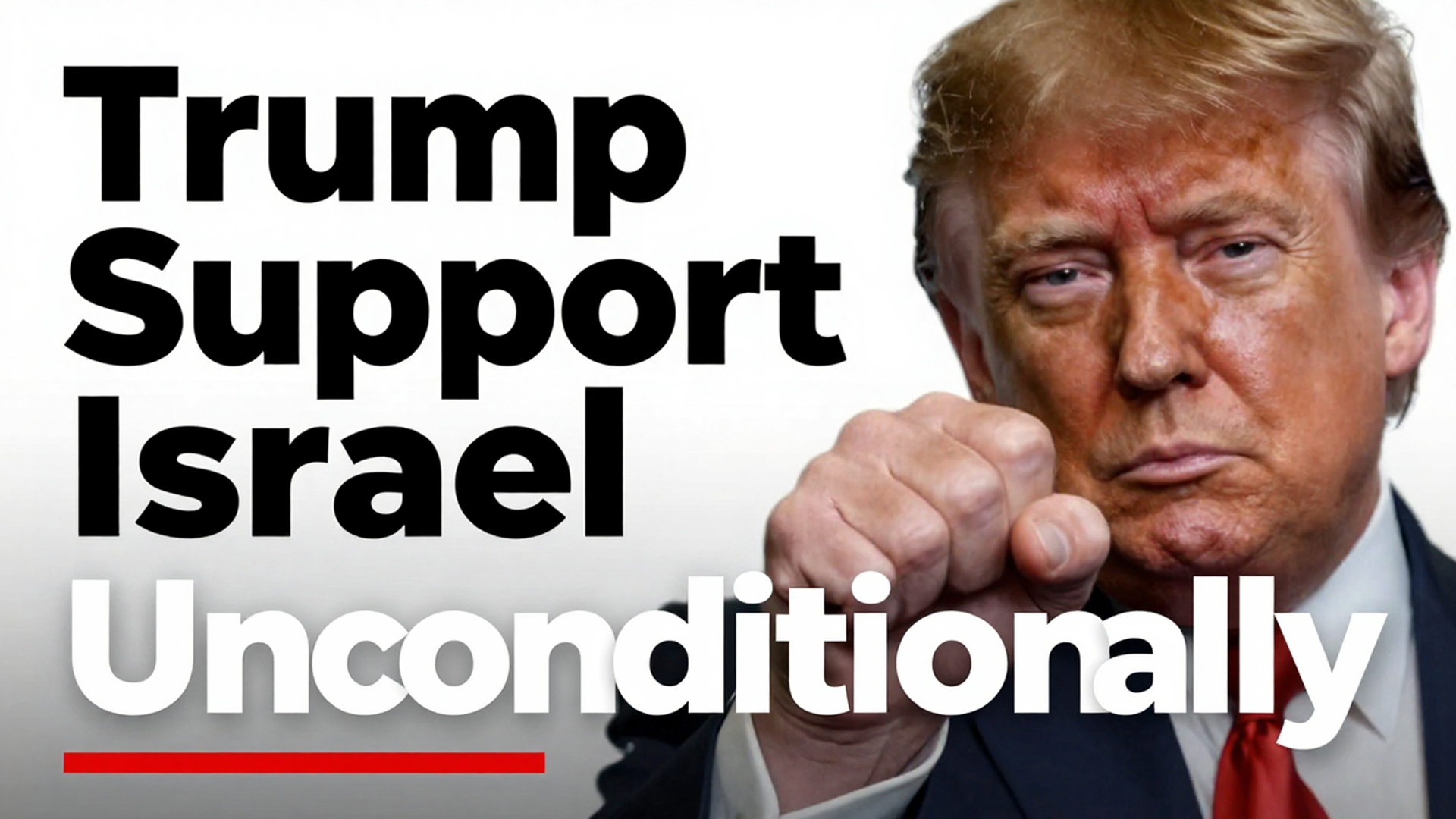
During a high-profile meeting with Israeli Prime Minister Benjamin Netanyahu at Mar-a-Lago on December 29, Trump reiterated that the United States would fully support Israeli military action if Iran attempts to rebuild nuclear or ballistic missile capabilities reportedly damaged in earlier strikes this year. Speaking to reporters after the meeting, Trump declared that any Iranian effort to revive such programs would be met with overwhelming force, stating that Israel would be justified in acting “fast,” particularly on nuclear infrastructure.
Mass Deportations Under Trump: Law-and-Order Revival or Humanitarian Breaking Point?
While Trump’s remarks echoed his long-standing posture of maximum pressure on Tehran, they also underscored a broader strategic message: under his leadership, Washington would place deterrence and alliance loyalty above diplomatic caution.
A Warning Framed as Deterrence
Trump’s comments followed weeks of regional speculation fueled by Israeli intelligence assessments suggesting that Iran may be relocating sensitive nuclear activities to hardened or undisclosed sites. These reports—while not independently verified—have been cited by Israeli officials as evidence that Tehran is attempting to circumvent damage sustained during earlier U.S.-Israeli operations in mid-2025.
Trump framed his warning as preventative rather than provocative. “If they want to make a deal, that’s much smarter,” he said, signaling that diplomacy remains an option—but only from a position of perceived strength. This dual-track approach, combining threats with offers of negotiation, mirrors Trump’s earlier dealings with North Korea and Iran during his first term.
Yet critics argue that such rhetoric risks narrowing diplomatic off-ramps by normalizing preemptive military action. They warn that repeated public endorsements of force may harden positions in Tehran, embolden regional proxies, and increase the likelihood of miscalculation.
Israel, Iran, and the Shadow of Escalation
For Israel, Iran’s nuclear ambitions remain an existential concern. Successive Israeli governments—across political lines—have maintained that they will not allow Tehran to acquire a nuclear weapon. Trump’s unequivocal support provides Israel with political cover, reinforcing its long-held doctrine of unilateral action if international mechanisms fail.
Supporters of Trump’s stance argue that deterrence works precisely because it is unambiguous. They credit prior U.S. pressure campaigns with weakening Iran’s regional influence, constraining Hezbollah’s capabilities, and contributing to temporary ceasefires elsewhere in the region.
Opponents, however, see the risk of escalation multiplying. Any Israeli strike on Iranian facilities could trigger retaliation across multiple fronts—from Lebanon to the Red Sea—potentially drawing U.S. forces deeper into a regional conflict at a time when Washington faces mounting challenges in Eastern Europe and the Indo-Pacific.
Syria, Alliances, and Strategic Optimism
The meeting also touched on Syria’s evolving political landscape following the collapse of the Assad regime earlier in 2025. Trump expressed optimism that Israel could coexist with Syria’s new leadership, framing the change as an opportunity for regional stabilization.
Still, Israeli military operations in southern Syria continue, underscoring the gap between diplomatic hope and security realities. While Trump projected confidence in personal diplomacy and strongman leadership, the situation on the ground remains fluid and volatile.
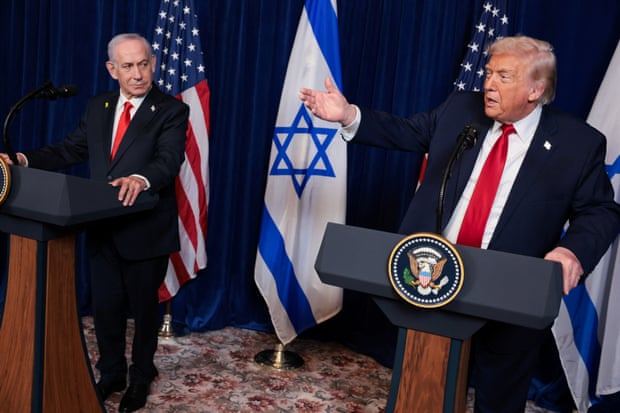
Donald Trump declared he would back Benjamin Netanyahu ‘immediately’ if Israel’s prime minister ordered another attack on Iran’s nuclear installations. Photograph: Jonathan Ernst/Reuters
A Familiar Trump Doctrine Reemerges
At its core, Trump’s renewed alignment with Netanyahu reflects a consistent worldview: alliances are strongest when backed by force, deterrence outweighs restraint, and credibility is built through action rather than consensus.
Netanyahu’s announcement that Trump would receive Israel’s highest civilian honor symbolized this convergence. Yet beneath the public unity lie unresolved tensions over Gaza’s future, West Bank settlements, and the limits of military solutions to deeply rooted conflicts.
Conclusion: Strength or Brinkmanship?
Trump’s remarks reignite an enduring debate in U.S. foreign policy: does peace emerge from uncompromising strength, or from calibrated restraint?
To his supporters, Trump’s posture represents clarity in an uncertain world—a firm red line that deters adversaries and reassures allies. To critics, it is brinkmanship that risks entangling the United States in another open-ended Middle Eastern conflict.
As Iran weighs its next move and Israel calibrates its response, one reality is clear: under Trump, ambiguity is not a feature of American policy. Whether that clarity stabilizes the region—or accelerates its descent into conflict—remains one of the defining questions heading into 2026.